Home › Services
Sealcoating in Houston TX that buys asphalt time against sun and rain
Asphalt in Greater Houston ages from the top down. Months of hard sun bake the binder until the surface turns chalky gray, small stones start to loosen, and every summer downpour finds a few more hairline openings. Sealcoat is a thin protective layer that slows that process on pavement that is still structurally sound. It is not a repair, it does not add strength, and it cannot rescue a lot or drive that is already breaking apart underneath. This page explains what a good sealcoating job involves, which sealers are common on the Gulf Coast, why crack filling has to come first, how weather sets the schedule, and how to tell whether your pavement is a good candidate or whether the money belongs somewhere else.
What sealcoat actually is, and what it cannot do
Sealcoat is a liquid coating, usually a blend of a binder, water, fine mineral filler and often sand, spread over existing asphalt in one or more thin passes. Once it cures it forms a dark film that shields the asphalt binder below from sunlight, water and spilled fuel or oil.
What it does not do matters just as much. A coat of sealer will not level a dip, bridge a pothole, stop a crack from moving, or hold up a section where the base has gone soft over wet clay. Spread over failing pavement, it simply paints the damage black for a season. If your surface shows spiderweb cracking, sunken areas or broken edges, those problems belong on the asphalt repair list first, and sealer goes down afterward.
Why Gulf Coast sun is hard on asphalt
Fresh asphalt is nearly black because the binder holding the stone together is rich and flexible. Ultraviolet light and heat oxidize that binder over time. On the Gulf Coast the exposure is relentless: long summers, high pavement temperatures, and very few cool cloudy stretches to give the surface a break. As the binder oxidizes, it stiffens and shrinks, the color fades toward gray, and fine aggregate begins to rattle loose. Contractors call that raveling.
Brittle asphalt then cracks more easily when the clay soils below swell after heavy rain and shrink back during dry spells. Water slips into those cracks, reaches the base, and the cycle speeds up. Sealcoat interrupts the first step. By keeping sun and water off the binder, it helps the surface stay flexible longer, which is why owners who seal on a steady schedule tend to see their pavement last noticeably longer than neighbors who never do.
Asphalt-emulsion, coal-tar and polymer sealers compared
The sealer itself is the biggest single choice on the job, and the options differ in durability, odor, handling and local acceptance. A contractor should name the product family in writing, not just say a property will be sealed.
- Asphalt-emulsion sealer: refined asphalt suspended in water with clays and fillers. It is the common choice across much of the country today, cleans up with water, has a mild odor and is generally accepted wherever coal tar is restricted. It can be somewhat less resistant to fuel and oil than coal tar.
- Coal-tar sealer: made from a byproduct of coke production. It has long been valued for fuel resistance and durability, but it carries a strong odor, can irritate skin, and has drawn environmental scrutiny over runoff. Some jurisdictions restrict or ban it, so the contractor should confirm what is allowed for your address.
- Polymer-modified and acrylic blends: sealers with added latex or synthetic polymers that can improve flexibility, adhesion and wear. They often cost more and some need tighter weather conditions to cure well.
Sand, polymers and other additives in the mix
Most sealer is mixed on site before it goes into the tank or the squeegee machine. Silica sand or a similar fine aggregate is often added to give the cured surface texture, which improves traction and helps the film resist wear from turning tires. Too much can make the coat brittle.
Each manufacturer publishes its own mix ratios, and a careful applicator follows them rather than thinning the product with extra water. Over-diluted sealer looks fine on day one and fades early, so ask what ratio will be used.
Cleaning and oil-spot priming come before any sealer
Sealer only lasts as long as its bond to the pavement. Dust, clay tracked in from construction, grass clippings, leaves and loose stone all prevent that bond. A proper job starts with edging grass back from the borders, then blowing, sweeping or power-brooming the whole surface.
Oil, transmission fluid and gasoline spots get special attention. Petroleum softens asphalt and repels water-based sealer, so a coat spread straight over a stain often peels or stays tacky. The usual fix is to scrape off any built-up residue and then apply an oil-spot primer that locks the remaining contamination in place. Deeply saturated spots where the asphalt has turned soft and crumbly are past priming and need to be cut out and patched before sealing.
Fill the cracks first or the sealer is wasted
Sealcoat is too thin to close a crack. Water will still find the gap, travel down to the base and soften the clay beneath. That is why crack treatment should come before every sealcoat, not as an optional extra.
- Clean the cracks with compressed air, a wire brush or a router so debris and vegetation come out and the sealant has clean walls to grip.
- Choose the material by crack width and movement: hot-pour rubberized sealant for working cracks that open and close with temperature and moisture, cold-applied filler for small, stable cracks.
- Fill the crack flush or with a slight band over the top so water sheds instead of pooling along the joint.
- Allow the sealant to set before sealer goes on, following the product guidance and the day's temperature.
- Leave wide, crumbling cracks and webbed areas for patching, because crack sealant cannot stand in for missing pavement.
Squeegee or spray application on Houston pavement
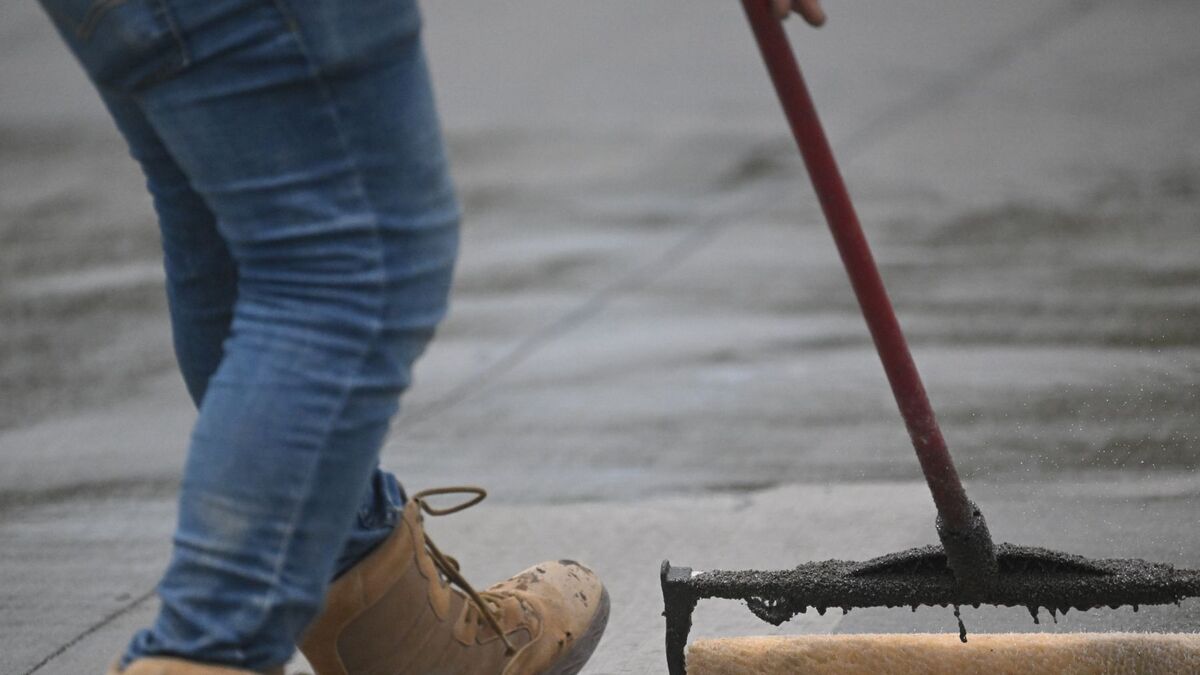
Sealer goes down in two main ways. Squeegee application, done by hand or with a machine-drawn squeegee, works the material into the surface pores and tends to leave a thicker, more even film, which is especially helpful on older, porous asphalt. Spray application is faster on large open lots and gets a uniform appearance, but it lays a thinner film per pass unless it is carefully controlled.
Many experienced applicators combine the two: a squeegeed first coat to fill the texture, then a sprayed second coat for uniform color. Edges along curbs, buildings and landscaping are cut in by hand so sealer stays off concrete and plants. Ask how many coats are planned, and where.
Rain, heat and cure windows on the Gulf Coast
Weather sets the calendar for sealcoating more than any other factor. Most water-based sealers need the surface and air to be warm, the pavement dry, and no rain for a stretch after application so the film can cure before water washes it away. Houston generally meets the warmth requirement for much of the year, but rain is the constant variable: an afternoon thunderstorm that pops up after the crew leaves can streak or strip a fresh coat.
Extreme heat brings its own problems. On a blazing afternoon the surface can be hot enough that sealer skins over before it bonds, so crews often mist the pavement lightly or work in the cooler morning hours. High humidity slows curing too, and the contractor sets the reopening time for your job.
How often to seal in a hot, wet climate
There is no single correct interval. Traffic, sun exposure, sealer type, drainage and how well the prior coat was applied all play in. As a general pattern, many residential drives and lightly used lots are resealed every few years, while busy commercial lots with drive lanes and turning trucks may need attention more often in the high-wear areas. New asphalt is usually left unsealed for a period so its light oils can work out and the surface can harden; the contractor who placed it should tell you when.
The better test is the pavement itself. When the surface turns from black to gray, when fine stone appears on the surface after rain, or when water soaks in rather than beading, the previous coat has largely worn off. Sealing too often is also a mistake, because stacked coats build a thick film that cracks and peels on its own.
When sealcoating is wasted money
Honest advice sometimes means telling an owner not to seal yet, or not to seal at all. Sealer does not pay off in these situations:
- Widespread alligator cracking or soft spots that signal base failure. The structure is the problem, and the right next step is repair or reconstruction.
- Pavement that is near the end of its life and already scheduled for an overlay or replacement within a short time.
- Areas that hold standing water after every rain. Ponding will lift the coat and damage the asphalt beneath, so the drainage needs to be corrected first.
- Brand-new asphalt that has not had time to cure, where sealing too early can trap oils and leave a soft surface.
- Surfaces still coated with a recent, intact layer of sealer, where another pass mainly adds buildup.
Scheduling sealcoat around a business, and what drives the cost
A commercial lot has to stay usable, so the work is usually phased. The contractor can seal one half or one row of stalls at a time, rope off sections, and coordinate with the owner on signage and access for customers, tenants and deliveries. Evenings, early mornings and weekends are common for retail centers, offices and churches, and warehouses often plan around shift changes and dock schedules. Because sealer covers the existing paint, restriping normally follows; the layout side is covered on the parking lot striping page.
No two sealcoat jobs are priced alike, and a contractor sets the number only after seeing the site. The main cost drivers are total area, how much crack sealing and patching is needed, the amount of oil-spot prep, the sealer product and number of coats, access and obstacles, phasing or after-hours work, and restriping. A complete proposal should spell out each of those items, the product name, the planned coats, the cure and reopening plan, and what happens if rain interrupts the work. When the pavement looks gray and tired, use the contact page to share its location and some snapshots of the surface; the contractor covering Sugar Land and nearby communities will follow up.
Sealcoating in Houston TX that buys asphalt time against sun and rain — common questions
Is sealcoating worth it for an asphalt driveway in Houston?
For a driveway that is still in good structural shape, usually yes. The intense Gulf Coast sun oxidizes the asphalt binder, and a sealer layer slows that aging, keeps the surface darker and helps keep rainwater out of small openings. It is not worth it on a drive that is already breaking up, sinking or webbed with cracks, because the coating cannot fix any of that. In that case the money is better spent on repair or replacement, with sealing as the follow-up step once the surface is sound again.
How long after sealcoating can I drive on my driveway?
Most water-based sealers need at least a full day before cars can use the surface, and heavier vehicles such as trucks or trailers often need to wait longer. The exact time depends on the product, how thick the coat went on, the temperature and the humidity. Humid, overcast days slow curing, while sunny, warm days speed it up. Turning the wheels while parked on fresh sealer leaves scuff marks, so even after it is dry to the touch, it helps to drive gently for the first several days.
What happens if it rains right after sealcoating?
If a heavy rain hits before the sealer has had time to set, it can wash some of the material off, leave streaks or light patches, or cause a milky look as the water mixes with the coating. A light shower after the surface has skinned over usually does far less harm. Contractors watch forecasts closely for this reason and will often postpone rather than gamble. Ask any contractor you hire how they handle a rain-damaged coat and whether touch-up is part of the plan.
Is coal tar sealer allowed in the Houston area?
Rules on coal-tar sealer vary by jurisdiction, and some places across the country restrict or ban it because of environmental concerns about runoff. Rather than relying on a general answer, ask the contractor to confirm what is permitted for your specific address and whether your city, county or HOA has its own requirements. Asphalt-emulsion sealers are widely used as an alternative, and many owners simply choose them to avoid the odor and handling concerns that come with coal tar.
Why did my sealcoat start peeling after one summer?
Early peeling almost always traces back to preparation or application. Common causes include sealer spread over dust, clay film or untreated oil stains, product thinned past the manufacturer's ratio, application on a surface that was too hot or damp, or too many coats stacked on top of an old layer. Standing water that sits on the same spot after every storm will also lift sealer. A good contractor can usually tell from the pattern of the peeling which of these caused it.
Can sealcoating fix a faded parking lot that has potholes?
No. Sealer restores color and protects sound pavement, but it has no strength to fill holes or support weak spots. Potholes, broken edges and soft areas need to be cut out and patched, or in some cases rebuilt, before any coating goes down. Once those repairs are in place and have cured, sealcoating the whole lot gives a uniform appearance and adds protection to the surrounding asphalt. Restriping usually follows so the stalls, arrows and markings are visible again.
Talk through your site
Start with the address, what you want done, and a few photographs of the area, including anywhere water sits after a heavy rain.
Related work
Asphalt Paving
New asphalt and overlays built for Gulf Coast clay, flat drainage, heavy rain and summer heat.
Parking Lot Paving
Lots for retail centers, offices, churches, warehouses and apartments, phased to keep a business open.
Parking Lot Striping
Layout, restriping, stalls, arrows, fire lanes and accessible spaces, laid out to the governing standards.
Asphalt Repair
Potholes, alligator cracking, base failure, edge breaks and the repair-versus-overlay decision.
Asphalt Driveways
Asphalt for long, rural and acreage driveways, and how it compares with the concrete common in the city.
Across the metro
Katy
West-side growth along I-10 with master-planned communities, flat prairie clay and slow drainage.
Pearland
South-side suburb with commercial strips, newer subdivisions and heavy-rain drainage concerns.
Sugar Land
Fort Bend County city with office parks, retail centers, HOA communities and expansive clay.
Cypress
Northwest growth corridor with acreage lots, long driveways and new commercial pads.