Home › Services
Parking lot striping in Houston, from fresh layout to faded-line restriping
Lines are the cheapest part of a lot to maintain and the first thing a driver notices when they disappear. Around Houston, paint takes a beating from summer sun, sudden downpours and the constant turning of tires in tight aisles, so a lot that looked crisp two years ago can read like a puzzle today. This page covers how a lot gets laid out, how traffic markings guide cars and people, who governs fire lanes and accessible spaces, which paints hold up in Gulf Coast weather, and when restriping should line up with other work. If your markings have faded past the point of guiding anyone, the contact page is where to drop the lot's location and a few wide shots of the striping.
What the paint on a parking lot is really doing
Striping is traffic control painted flat on the ground. It tells a driver where to enter, which way an aisle runs, where to stop, where to park and where not to. It also tells a pedestrian where the safe walking route is. When lines fade, people improvise, and improvised parking eats spaces, blocks drive lanes and puts cars where a fire truck or a delivery rig needs to go.
There is a capacity side as well. A careful layout fits more stalls into the same asphalt, while a sloppy one leaves dead corners that customers learn to avoid.
Stall geometry and how a layout is planned
Before anyone opens a can of paint on a new or reconfigured lot, somebody has to decide the pattern. The big choices are stall angle, aisle direction and how the rows relate to entrances, buildings and islands. Straight-in stalls with two-way aisles squeeze the most cars onto a wide lot. Angled stalls paired with one-way aisles make pulling in easier and steer traffic in a single loop, which suits narrow lots and busy storefronts where people are in a hurry.
Stall width and aisle width trade against each other. Wider stalls mean fewer door dings but fewer spaces; tighter stalls frustrate drivers of the large pickups common across Greater Houston. Local site plan rules and the property's approved drawings set the final numbers.
- Ninety-degree stalls: maximum count, two-way aisles, more backing conflicts
- Angled stalls: easier entry, one-way aisles, slightly fewer spaces on most lots
- Compact or reserved stalls: useful when marked clearly and placed where they make sense
- End islands and curb lines: they define where rows begin and end and shape turning room
Arrows, stop bars, crosswalks and other traffic markings
Directional markings keep a lot from turning into a free-for-all at lunch hour. Arrows confirm which way a one-way aisle flows and warn drivers before they turn the wrong way. Stop bars and painted stop legends tell a car leaving a row or exiting onto a public street exactly where to pause. Crosswalk bars connect the parking field to the building entrance so people on foot have a visible, predictable path.
- Directional arrows at aisle entries and at the ends of one-way rows
- Stop bars and stop legends at exits and internal intersections
- Crosswalk striping from the parking field to doors and sidewalks
- Loading zone and no-parking hatching near docks, dumpsters and service doors
- Speed bump marking so raised humps are visible at night
Fire lanes are set by the fire marshal, not by guesswork
Fire lane markings exist so emergency apparatus can reach a building without being blocked. In the Houston area, the fire marshal with authority over the address sets the requirements: where a lane must run, how it is marked, what wording appears and whether signs are needed alongside the paint. Those requirements differ between jurisdictions, and a lot in unincorporated Harris County can fall under a different office than one inside a city limit.
That is why a responsible striping contractor never paints a fire lane from memory. The usual path is to check the property's approved site plan, ask the owner whether the fire marshal has issued notes or inspection comments, and confirm the current local requirements before laying anything out. If a lane has faded or was painted incorrectly years ago, refreshing it to what the authority actually wants is often the most important part of a restripe.
Accessible parking spaces and access aisles
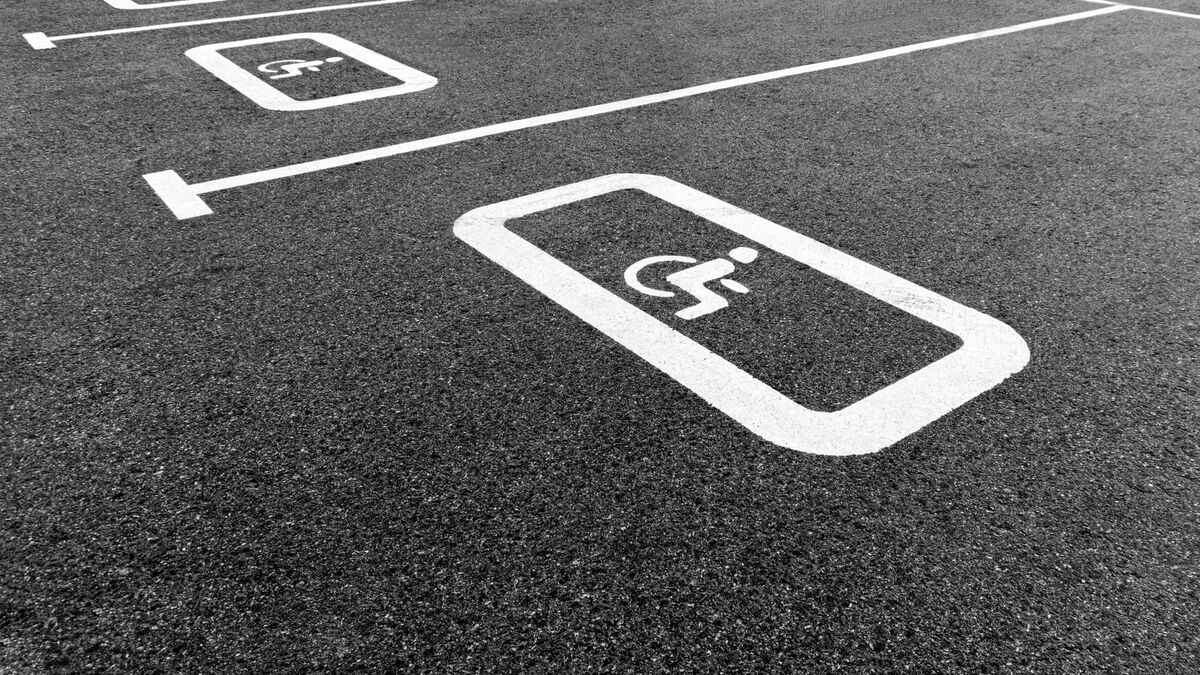
Accessible spaces are governed by federal accessibility standards and by the Texas Accessibility Standards. Together they control how many accessible spaces a lot needs relative to its total parking, how they are sized, how the adjacent access aisle is marked, how the route connects to an accessible entrance, what signage goes with each space and how much slope the parking surface may have. Because those rules carry real legal weight, the details should come from the current standards and a qualified review of the site, never from a rule of thumb.
A common problem on older Houston lots is an accessible space sitting on asphalt that has settled on clay and now slopes too much. Paint cannot fix grade; that takes asphalt repair or reconstruction first, and a striping proposal should say so when the contractor sees it.
Paint choices: waterborne, solvent-based and thermoplastic
Most parking lot striping is done with traffic paint sprayed from a walk-behind or ride-on striper. The choice of material affects how fast the lot can reopen, how long the lines stay bright and how well the paint grips the surface underneath.
- Waterborne acrylic traffic paint: the everyday choice for most lots, lower odor, easy cleanup, dries quickly in warm weather and bonds well to sealcoated asphalt
- Solvent-based traffic paint: chosen at times for its bite into older asphalt, though air quality rules can limit its use
- Thermoplastic: a material heated and applied as a thick, raised line that fuses to the pavement, used mostly for high-wear markings like crosswalks, stop bars and arrows
- Reflective glass beads: dropped into wet paint so headlights pick up the lines at night, a worthwhile addition on lots used after dark
Striping new asphalt versus painting over old lines
A freshly paved lot is a blank slate. The contractor snaps chalk lines from the approved layout, measures off fixed points such as curbs and building corners, and paints the full pattern. New asphalt also carries oils on its surface for a while, and a good contractor follows the paint maker's guidance on how long to wait or how to prepare the surface so the paint bonds instead of peeling. If you are planning a new lot, the parking lot paving page covers the paving side.
Restriping an existing layout is faster because the old lines serve as the guide. The catch is that tracing copies mistakes too, so a walk-through beforehand is the moment to catch an outdated stall or a backward arrow.
Blacking out old lines when the layout changes
When a lot is reconfigured without being repaved or resealed, the old lines have to disappear or drivers follow them anyway. The usual method is blackout paint: a dark coating applied over obsolete lines so they blend into the surrounding asphalt. On a weathered lot, the blackout can look darker than the faded pavement around it, and in certain light the old pattern may still ghost through.
Grinding removes paint more completely but scars the surface and can let water in. Thermoplastic is especially stubborn to remove.
Timing striping with sealcoating and repairs
Sealcoat covers every line on the lot, so any seal job is automatically a restripe job. The sensible order is repairs first, then crack sealing and sealcoat, then striping once the seal has cured to the point where paint will bond and tires will not track it. The sealcoating page explains the sealing side of that sequence.
Restriping a lot that badly needs sealing rarely pays off: paint on raveling asphalt chips quickly and gets buried when the surface work happens anyway.
Scheduling around business hours and Gulf Coast weather
Nobody wants to close a busy lot on a weekday afternoon. Striping lends itself to off-hours work because it moves quickly and does not need heavy equipment. Many commercial jobs are done overnight, early on weekend mornings or in sections, with cones and tape keeping cars off wet paint while the rest of the lot stays open.
Weather sets the real window. Paint needs a dry surface and no rain in the forecast long enough to set up. On the Gulf Coast, a clear morning can turn into a downpour by afternoon, and heavy dew or humidity can slow drying in the early hours. Pushing a job by a day beats losing fresh lines to a storm.
How often a Houston lot needs restriping
There is no fixed calendar. Frequency depends on traffic volume, paint type, sun exposure and whether delivery trucks turn across the same lines every day.
The Houston climate shortens paint life compared with milder regions. Intense ultraviolet light fades color, heat softens the surface the paint sits on and frequent heavy rain carries grit that wears lines down. Once stall lines are hard to pick out from a car seat, arrows are partly gone or a fire lane legend is no longer readable, it is time.
- Stall ends worn away where tires cross them
- Arrows and legends faded to faint outlines
- Lines that vanish under headlights after dark
- Paint chipping or flaking off a raveling surface
What a solid striping proposal spells out
Quotes for striping can look alike on the surface and differ a great deal underneath. Cost drivers include the total linear footage of lines, the number of stalls, arrows, legends and stencils, whether a new layout must be designed, how much blackout or removal is involved, the paint type, night or weekend scheduling, phasing and the condition of the asphalt. The contractor prices the job after seeing the lot, and a complete proposal makes each of those items visible.
Ask for the scope in writing, including how fire lanes and accessible spaces will be confirmed, what paint and beads will be used and whether the price assumes restriping existing lines or a fresh layout. Properties across the region, from Katy to Cypress and the rest of the service areas, follow the same basic process:
- Send the address, rough lot size and photos of the current lines through the contact page
- Mention any fire marshal notes, accessibility concerns or planned layout changes
- A contractor walks the lot, measures and checks surface condition
- You receive a written scope and price based on what was seen
- The work is scheduled around your hours and the forecast
Parking lot striping in Houston — common questions
How often should a parking lot be restriped in Houston?
It depends on traffic and paint, but Gulf Coast sun and rain wear lines out faster than in milder climates. Busy retail and grocery lots tend to need attention sooner than a quiet office lot. Rather than going by a set schedule, check the lot from the driver's seat in daylight and after dark. If stall lines, arrows or fire lane wording are hard to read, restriping is due. Any time the lot is sealcoated, it needs restriping as well.
How long after sealcoating can a parking lot be striped?
The sealer has to cure enough that paint bonds to it and tires will not track it around. On a hot, dry Houston day that can happen fairly quickly, while humidity, shade or cooler temperatures stretch it out. The contractor follows the sealer and paint makers' guidance and checks the surface before striping. Many sealing jobs are planned so the lot is sealed and then striped within the same overall closure, which keeps disruption to a minimum.
Who decides where a fire lane has to be painted?
The fire marshal with authority over your property sets fire lane requirements, including location, marking style and wording, and sometimes requires signs as well. Rules vary between cities and unincorporated parts of the county, so what applies on one side of a road may differ from the other. Start with your approved site plan and any inspection notes you have. A striping contractor can then lay out the lane to match what the authority requires.
How many handicap parking spaces does my lot need?
The required number is set by federal accessibility standards and the Texas Accessibility Standards, and it scales with the total number of parking spaces on the lot. Those standards also cover van-accessible spaces, access aisles, signage and slope. Because the rules carry legal weight and can change, the count for your lot should be confirmed against the current standards for your specific layout rather than estimated. A contractor can flag spaces that appear out of date.
Is thermoplastic worth it for parking lot markings?
Thermoplastic is thicker and generally longer-lasting than sprayed traffic paint, and it holds up well where tires grind across markings constantly. That makes it attractive for crosswalks, stop bars and arrows in high-traffic spots. It costs more to apply, is hard to remove if the layout changes later and is usually overkill for ordinary stall lines. Many owners use paint for the stalls and reserve thermoplastic for a handful of heavy-wear markings.
Can old parking lot lines be removed completely?
Not always cleanly. Blackout paint covers old lines but can look darker than faded asphalt and may ghost through in some light. Grinding removes more of the paint but roughens the surface and can leave scars. The most complete reset usually happens when the lot is sealcoated, because the uniform coat hides the old pattern and the new layout goes down on a fresh surface. If you are changing layouts, consider timing it with sealing.
How long before cars can drive on freshly striped lines?
Waterborne traffic paint usually dries quickly in warm, dry weather, and many lots reopen the same day once lines are dry to the touch and no longer pick up on tires. Humidity, shade, dew and cooler night temperatures all slow drying. Thermoplastic hardens as it cools. The contractor cones or tapes off sections until they are ready, and on busy properties the work is often phased so part of the lot stays open throughout.
Talk through your site
Start with the address, what you want done, and a few photographs of the area, including anywhere water sits after a heavy rain.
Related work
Asphalt Paving
New asphalt and overlays built for Gulf Coast clay, flat drainage, heavy rain and summer heat.
Parking Lot Paving
Lots for retail centers, offices, churches, warehouses and apartments, phased to keep a business open.
Asphalt Repair
Potholes, alligator cracking, base failure, edge breaks and the repair-versus-overlay decision.
Sealcoating
Crack sealing and sealcoat that slow sun oxidation and water damage, and when sealing is wasted money.
Asphalt Driveways
Asphalt for long, rural and acreage driveways, and how it compares with the concrete common in the city.
Across the metro
Katy
West-side growth along I-10 with master-planned communities, flat prairie clay and slow drainage.
Pearland
South-side suburb with commercial strips, newer subdivisions and heavy-rain drainage concerns.
Sugar Land
Fort Bend County city with office parks, retail centers, HOA communities and expansive clay.
Cypress
Northwest growth corridor with acreage lots, long driveways and new commercial pads.